
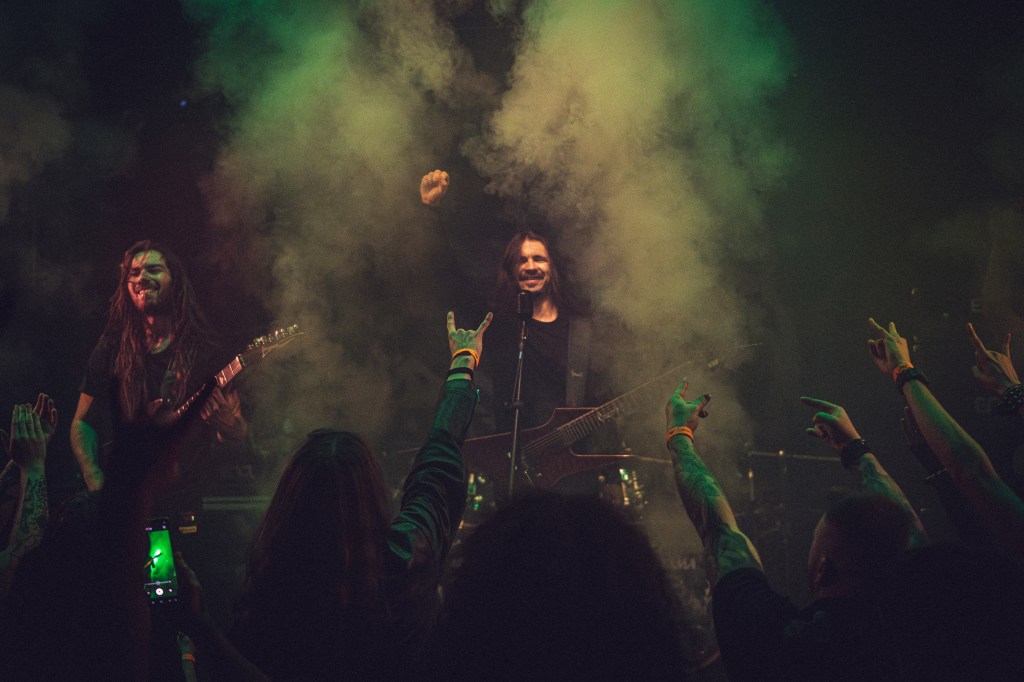
Photo by: Mateusz Prokowski; Thanks to: Silke Yli- Sirnio;
Hello Steffen, thank you for your time and for answering these questions. How are you doing these days, busy with the release of your new album?
Things are very busy over here preparing a row of tours supporting the new album A Sonication, and the release of our new album. Spirits are high, and the vibe couldn’t be better.
We already have a few advancements of “The Sonication”. Could you explain the concept, the themes and inspirations of this new record?
A Sonication has been album number two within a trilogy we started a few years ago, when A Valediction has been released. While the new album sees a silver branding, the previous showed bronze colors. Album number three will become the golden one. While A Valediction dealt with farewells in various perspectives, the new album shows are more introverted and melancholic pace, almost a reflective feel I would reconsider. The record became much more personal, less polished and with a human touch to differ from soulless productions that are released in recent years. The overall production differs significantly and shows a wall of sound concept, similar to Akroasis, a record we release a long time ago.
For the album cover, once again we have an amazing painting by the great Eliran Kantor. How involved are you in the creative process of the Obscura imagery and artworks? Do you work closely with the artists or do you give them more freedom?
When the trilogy has been laid out, I was looking for artists that could keep the big picture of all albums we released in the past, but add a more human and timeless touch to them. Along to the shift of album producers and the label, I’m looking first the big picture and coherent releases that match properly. With Eliran we found the right personality and artist to share ideas with. Also on a personal level we clicked and have mutual respect for each other. Colors, rough sketches, ideas and notes coming from my end as input, but in the end, Eliran delivered this wonderful piece of art you can interpret from various points of view. Almost with a poetic vibe, A Sonication matches with the previous album perfectly.
And focusing more on the musical side of things, are there any new elements we can find in “A Sonication”?
Once again we found new ways to work with the vocoder and vocal lines to work especially on details to face up the overall sound. My intention was to create a more song oriented, less guitar focused record with the new album. Showcasing all instruments within a balanced out composition and mix has been key. With more room for all vocal lines, we found a way to work out the classic vocoder robotic voices into a golden line between synth, space choir, and orchestra. Definitely a big development that has much more depth to offer. With the of a wall of sound production, we underline this setup a lot and gain a rather passive, laid back vibe from start to end. The signature sound we developed is present all second, but details and listening experience may differ slightly. I’m very proud of the record and the overall outcome.
This is the second part of a trilogy of albums started with A Valediction. Could you speak about the overarching concept and connection between these parts? Is the third act already somewhat defined, or do you work on each one at a time?
The concept of a trilogy combines the big picture and helps al to to prevent writers block when working on ideas. With pictures, sounds and a certain feel where to go with the new album, it is quite easy to select pieces that may work or rather be deleted from scratch. I finished a four album concept with the Relapse Years already, that took 10 years in total. With the new trilogy a new chapter begun while the band still sounds as it sounds. I started collecting ideas for the next record, but won’t start assembling new music before the new album drops and the first tours are wrapped.
Since the beginning, Obscura has always been pushing boundaries on the tech death genre. Do you find it difficult to innovate and come up with new ideas after all these years? Do you have any routines or rituals that help you get creatively inspired?
Well, Obscura has been around for 23 years now, while most of our friends that started have been vanished or stoped playing music at all. Necrophagist, Spawn Of Possession, The Faceless and may more are no more. I decided years ago to follow this route since I enjoy the music, lifestyle and traveling a lot. To me, playing in a band doen’t mean only writing music, that sounds too one dimensional. Music, lyrics, production, layouts, stage and light production, photography and all kinds of aesthetics are similar important and a treasure for inspiration. There is so much more to achieve and personally I enjoy the ride, all the experience you gain with each show, tour, album production of recording a music video with a new team. I love what I’m doing, and the band sees a loyal fan base since many many years I’m grateful for.
During the last decades, the music industry changed dramatically in so many aspects. Streaming platforms appeared, CDs sales declined, a few years ago we had COVID, and now AI seems like it could be another agent for change. What challenges did you have to overcome as a musician and band leader in these turbulent times?
To be straight honest, there have been changes constantly, not only recently. Bands and musicians adapt, find solutions and start to work differently. There is no fear for new techniques, gear or approaches from my end. I follow up, and adapt each situation the best way possible. In general I’m a rather optimistic person and see the positive side of things than seeing everything negative from scratch. All bands, labels, promoters and fans are in the same boat, and it’s challenging to keep everything balanced out. As band we had out fair share of bumps along the road, some minor, some major issues came across. Thanks to close friends and good relations, family and our fans base, we came across all of them. I don’t take anything for granted, and stay grateful.
And going back to your origins as a musician, how were you introduced to metal and extreme music? What were your first steps as a guitar player like?
Friends showed me music and I followed that path to find more and more new sounds, groups and artists to listen to. Back then we traded CDs, later files and nowadays streams. What doesn’t change are the positive vibes when you discover a new band that just hits a nerve on you, and you’ll have a group to follow to again. Recently Yoth Iria from Greece was a new discovery, Tribulation from Sweden for a while, and Vampire from Sweden as well as Unto Others, a US band I admire a lot. When I started picking up a guitar with 16, I tried to play music of the bands I loved, but haven’t been active at that time anymore. All those groups had been disbanded and the musical style was less than popular. Death, Cynic, Atheist, Pestilence on the one hand, Dissection, Unanimated, Sacramentum and Dawn on the other hand. I haven’t had lessons and needed to build my own repertoire from scratch, if you listen to the band Obscura and Thulcandra, you head the developments from a beginner to the status of this present day.
As a music fan, do you like to follow new releases from other bands? Which artists are you enjoying these days, inside and outside metal?
Yes, I try to keep up with new artists or bands I have overseen for years. Mostly through recommendations of friends to be honest. Also a few magazines are out there I follow and read regularly to listen to new groups regularly. Aside the bands mentioned above, Igorrr, Ghost or Belphegor are bands I spin regularly.
A lot of people do not know it, but you also have a black metal project called Thulcandra. How do you balance the workload and schedule between the two bands? Are there any plans to tour with Thulcandra?
We just finished a European tour with Thulcandra, co-headlining with Swedish legends Sacramentum and support by Dutch newcomers Nephylim. Thulcandra has a history of 5 full length records, a demo and a live album up to this day. We are selective when it comes to concerts and pick only shows or tours we are interested in. We toured North America, Europe and the UK already. This year we will embark on our first tours to Mexico in March, and Asia in July. The reputation of the band has been growing since the beginning, and we see a lot of positive feedback from all over the world. I love both musical styles the same way, but Obscura stays a full touring band, while Thulcandra will be a band you won’t see on every festival in summer.
And speaking about touring, Obscura is coming again to Barcelona, Madrid and Bilbao among a lot of other European cities. Do you hold any memorable moments from your previous Spanish incursions? What is the weirdest thing that has happened to you on the road?
The last years we have been granted with full venues and here and there even sold out shows in Spain. Fans are loud, wild and very dedicated ever since. The “Silver Linings” tour will cover Spain, Portugal, the UK and France, Germany and Poland, as well as The Netherlands and Ireland. The tour starts in early February and we will present a lot of material of the new album. On the road things happen, and sometimes you meet the strangest of the strangest people that listen to your music. To me it is the weirdest thing that there are so many fans around the globe listen and enjoying this quite extravagant and niche music. I’m honored.
In such long tours with almost no rest days, how do you manage to keep your voice fresh every night, especially with such an aggressive singing style?
Discipline and experience might be the easiest answer. Over the years I could understand if my body shows signs to take it easy at times, and sometimes you can stay awake much longer than expected. I try not to burn the candle from both sides every day, and keep up staying busy all day, combined with warming up routines and preparing all gear, instruments and getting into he right vibe. The physical part might be one side, but you definitely need to be well rested and balanced out to deliver every evening.
With the new Obscura album, we also were surprised with a completely new line-up. Could you introduce the new members and what do you think each of them can contribute to the band?
With James Stewart a very versatile drummer that works with artists such as Decapitated and Belphegor joined the band. He showed to have the chops to perform the physical, but also the music end excellent. We met a few times and toured recently with Decapitated and Obscura for a few weeks in the UK. Kevin Olasz has been around in Germany for a long time and adds his unique style of leads to the record. We worked with different artists in the past and know each other since years. Robin Zielhorst was about to join Obscura in 2011 already, but finally it worked out. Robin worked with bands such as Cynic, Exivious and Our Oceans for years and has a very gentle down to earth mentality. All of them are not only great musicians, but grounded down to earth personalities you n excellent time to spend with.
In 2020 you joined forces with classic members Christian Muenzner and Jeroen Paul Thesseling as well as drumming star David Diepold to deliver A Valediction, which was a wonderful album. How come this line up was so short lived, given the importance of the reunion?
I don’t live in the past, but in the present day. Both members rejoined the band for an album, but it doesn’t make it a reunion to me since the approach, music and times have changed. David Diepold went back to a day-to-day job, Jeroen Thesseling left us after three shows of the first EU tour since the physical demands for live shows have been too much. Christian Münzner moved to Mexico and left all his active EU bands. We recorded a nice album together, but life goes on and so does Obscura.
Thank you again for your time and see you soon! If you have anything else to add or promote, now is the time.
All the best & thank you for the kind words and feature. See you all in February and listen to the new album “A Sonication”.
 undercoremag.com